
Updated: October 26, 2026
The light source matters less than what you put in front of it
Ask a newer camera operator how to improve their interview lighting and most will answer with a fixture: a bigger light, a better light, more lights. Ask an experienced director of photography and the answer is usually about control. The same fixture, shaped differently, produces images that look nothing alike.
Modifiers are the tools that do that shaping. They change the apparent size of a source, the softness of its edge, the direction it travels and how much of it reaches the shadow side of a face. Understanding a handful of them well is worth more than owning a large collection of fixtures.
The one principle underneath all of it
Softness is a function of the size of the source relative to the subject and its distance from them. A large source close to a face wraps light around it and produces a gentle shadow edge. A small source, or a large one placed far away, produces a hard shadow edge.
That single relationship explains almost everything modifiers do. A softbox makes a small source behave like a large one. Moving it closer makes it larger relative to the face, which makes it softer. Moving it back makes it harder and reduces falloff across the frame. Nothing else in lighting gives so much return for so little theory.
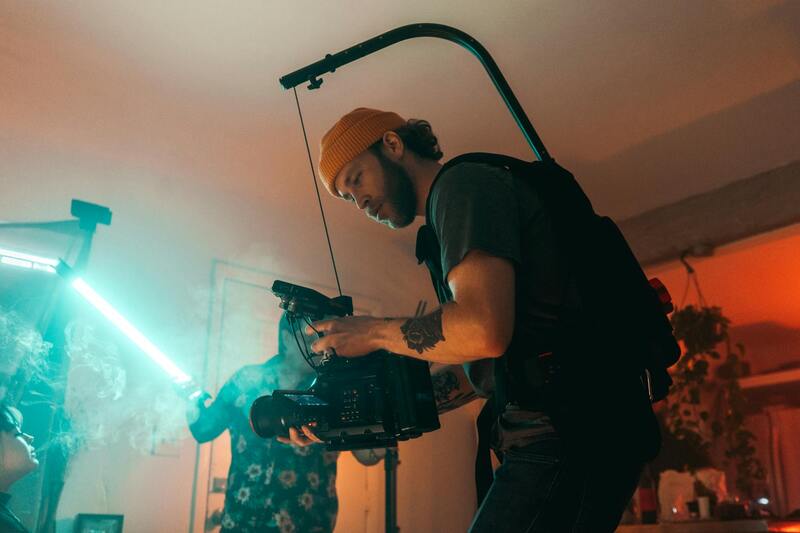
The modifiers that earn their place
Softbox
An enclosure that turns a point source into a large, even panel. The workhorse of interview lighting. Adding an internal baffle and a front diffusion layer evens it further. Rectangular boxes suit a seated subject well because the shape follows the body.
Octabox
A round or eight-sided version. The practical difference is the shape of the catchlight in the eye, which reads as more natural to many viewers, and slightly smoother falloff at the edges.
Umbrella
Cheap, fast to set up and packs small. A shoot-through umbrella spreads light widely, which is useful when you want ambience but a problem when you want control, because the spill goes everywhere including onto your background.
Diffusion frame
A fabric panel on a frame, with the light placed behind it. The most flexible option because the size of the source becomes the size of the frame. Larger frames produce very soft light suitable for wide shots and multiple subjects.
Bounce
Aiming a hard source at a white surface and using the reflection. The reflected light takes on the size of the surface, which is why bouncing off a large white wall or ceiling produces beautifully soft light for nothing. Colour matters: a beige wall will tint your light.
Grid or eggcrate
A honeycomb fitted to the front of a softbox that narrows the beam without hardening it. This is the tool for controlling spill, and it is what allows a soft key on a subject without lifting the background.
Flags and negative fill
Black panels that subtract rather than add. Placed on the shadow side of a face they deepen the shadow and add shape. In a bright white room, negative fill often improves an image more than adding another light.
Choosing for the situation
| Situation | Sensible approach |
|---|---|
| Single seated interview | softbox or frame as key, negative fill opposite |
| Two subjects side by side | larger frame further back for even coverage |
| Small room, white walls | gridded source plus flags to control bounce |
| Large dark space | bounce or umbrella to lift ambience, then key |
| Bright exterior | diffusion overhead, bounce for fill, flag for control |
| Corporate office with windows | work with the window as key, shape with bounce and flags |
The last row is the common Miami case. Offices here often have large windows with strong daylight, and fighting it with fixtures is expensive and rarely wins. Using the window as the key source and shaping it with diffusion, bounce and negative fill is usually faster and looks better. The full approach to corporate interview setups is covered in how to light a corporate interview for video in Miami.
Working with Miami light
Strong sun and bright skies are the defining condition for a good part of the year, and modifiers matter more here than in a grey climate.
Overhead diffusion is the single most valuable exterior tool. A large silk between the sun and the subject converts harsh direct light into something usable, and it also removes the squinting that ruins exterior interviews. It needs proper rigging and weighting, because a silk in a sea breeze behaves like a sail.
Bounce is the natural partner. A white or silver reflector fills the shadow side without adding a fixture, and sand and light-coloured concrete already bounce a great deal of light upward, which can produce unflattering fill from below. Flagging that off is often the fix.
Mixed colour is the other recurring problem. Daylight through a window, tungsten downlights and fluorescent panels in the same room produce a mess unless you decide which is your reference and control the rest. Modifiers with correction gel gaffed to the front are a quick way to bring one source into line with another.
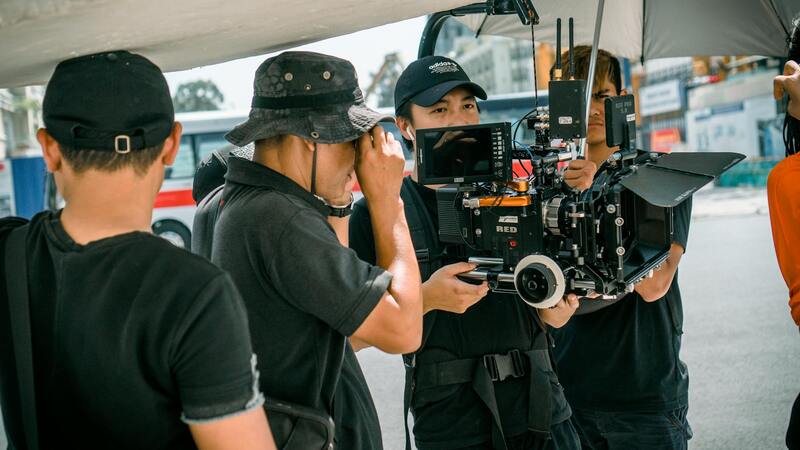
Practical setup habits
- Start with one light and shape it properly. Add a second only when the first has been used to its limit.
- Move the source before changing power. Distance changes softness and intensity together, and softness is the thing you cannot get back.
- Look at the shadow, not the highlight. The shadow edge tells you whether the source is the right size and distance.
- Subtract before adding. A flag on the fill side often does more than another fixture.
- Grid anything that spills. Especially in small rooms, where every wall returns light you did not ask for.
- Check the background separately. Light the subject, then look at what is behind them, then decide whether it needs anything.
- Sandbag everything. Modifiers add surface area, and surface area catches wind and gets knocked.
What to have in the kit
A workable modifier package for interview and corporate work in Miami is smaller than people expect: one medium softbox with a grid, one larger diffusion frame with fabric, a collapsible white and silver reflector, two or three black flags, a roll of diffusion and a roll of correction gel, plus enough stands, arms and sandbags to place all of it.
That package covers the great majority of situations, indoors and out. Additional fixtures are useful, but a second light without the means to control it usually produces a worse image than one well-shaped source. Monitoring the result accurately matters too, and that is discussed in shooting in log and reading your monitoring tools.
Speed matters as much as quality
On corporate and commercial work the lighting package is judged partly on how fast it goes up. A setup that produces a beautiful image in ninety minutes is often the wrong choice when the executive being interviewed has an hour between meetings.
Two habits keep things quick. The first is standardising: use the same modifiers in the same configuration for the same kind of setup, so the crew builds it without discussion. The second is pre-rigging where the location allows, arriving early and having the key source built before talent walks in, so the only remaining work is adjusting to the actual person.
Collapsible modifiers deserve a mention here. A softbox that takes fifteen minutes to assemble is a poor choice for a day with six company moves, however good it looks. Quick-open designs cost more and repay it immediately on any shoot where the schedule is tight.
It is also worth deciding in advance which parts of the setup you will sacrifice if time runs short. Usually the answer is background lighting first and hair light second, keeping the key and the negative fill, because those two carry most of the image. Knowing the order before you are under pressure prevents the situation where a crew strips the wrong element and the result looks flat.
Mistakes worth avoiding
Putting the source too far away and wondering why the light looks harsh. Using an umbrella in a small white room and then fighting the spill for twenty minutes. Adding fill until the face has no shape left. Forgetting that a bounce surface transfers its own colour. Rigging a large silk outdoors without adequate weight. And lighting the subject beautifully while leaving the background a flat, uninteresting grey.
Each of these is common, and each is corrected by the same discipline: look at what the light is doing rather than at what the fixture is set to.
How we approach lighting
We plan modifiers at the scouting stage, because the room decides them. A bright office with a big window needs a different package from a dark conference space, and knowing which we are walking into means the truck carries what is needed rather than everything we own.
On set we shape one source properly before reaching for a second, and we use negative fill routinely rather than treating it as an advanced technique. More technical guides are on our blog, there is background on the about page, and you can reach us through the contact page.
The short version
Softness comes from the size of the source relative to the subject and its distance, and every modifier is a way of manipulating that relationship. Softboxes and diffusion frames enlarge a source, grids control where it goes, bounce creates a large source from a hard one, and flags subtract to create shape. In Miami, overhead diffusion outdoors and window-as-key indoors solve most situations. Start with one light, move it before changing its power, judge the shadow edge rather than the highlight, subtract before adding, and sandbag everything with surface area.