
Updated: October 26, 2026
The problem with Miami sun on faces
Miami gives you a lot of light. For most of the year, the sun is high and strong for a long stretch of the day, and it reflects off sand, water, pavement and white walls. That is great for wide shots of the skyline. It is much less kind to the people in front of the camera.
Direct overhead sun creates dark eye sockets, harsh shadows under the nose and chin, squinting, and hot highlights on foreheads and cheeks. Talent start to sweat and lose energy. A camera can expose for all of it, but it cannot make it flattering. The fix that professional crews reach for is grip gear: silks, scrims, nets and solids, usually mounted on frames above or beside the subject.
This guide explains the main fabrics and frame sizes, how a grip team rigs them safely in Miami wind, how to balance the exposure once the face is under a silk, and how to plan for this gear in pre-production.
Fabrics: what each one does to the light
Grip textiles come in several families. They all go on the same kinds of frames, but they do very different things.
Silks and diffusion fabrics
A silk diffuses the sun. Instead of a single hard source, the light passes through a large surface and spreads out, softening shadows and reducing contrast on the face. Silks come in different densities, from light "quarter" silks that soften slightly to full silks that create a broad, gentle light. Grid cloth is a related fabric often used for the same job, valued for consistency and durability.
Nets and scrims
Nets reduce the amount of light without changing its quality much. A single net cuts roughly half a stop and a double about a full stop. They are useful when the light direction is good but just too bright, or for taking down a hot background element like a white wall.
Solids
A solid is black fabric that blocks light. On exteriors, solids create negative fill: placed beside the subject, they remove bounce from one side so the face keeps shape and contrast even under a big silk. Without negative fill, faces under a large overhead can look flat.
Bounce fabrics
Ultrabounce and similar white or silver fabrics reflect light back into the subject. Combined with a silk overhead, a bounce lets you shape a soft, flattering key light out of pure sunlight. For smaller setups, the same idea works with handheld reflectors, which we cover in our article on lighting for outdoor video shoots in Miami.
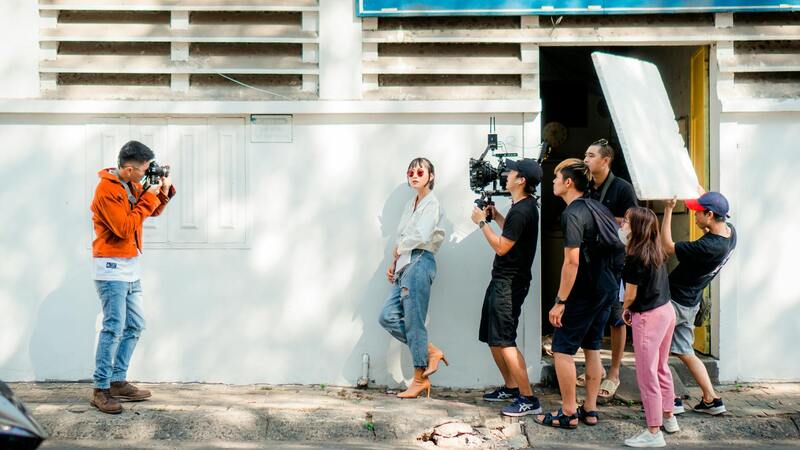
Frame sizes and when to use them
Grip frames are measured in feet. The common sizes on professional sets are:
- 4x4 and 6x6: small and quick. Good for a single close-up, an interview or a talking head. A 6x6 on a stand or held by a grip covers one person from the chest up.
- 8x8: a versatile middle size. Covers one or two people in a medium shot and can still be moved fast.
- 12x12: a big overhead or a large bounce. Covers a small group or a person walking a short distance. Needs more stands, more weight and at least two grips to move safely.
- 20x20 and larger: used on big commercial and narrative exteriors to put a whole scene under controlled light. These need a full grip crew, heavy rigging and calm weather.
A frame mounted horizontally over the subject is usually called a butterfly or an overhead. Mounted vertically on one side, it becomes a large source or a block.
Frames and lenses
The size you need depends on the shot. A tight close-up on a long lens hides a lot, and a 6x6 is often enough. A wide shot on the beach shows everything, so the overhead itself may end up in frame or cast a visible shadow line on the sand. Plan wides and close-ups separately, and consider shooting wides in better natural light (early morning or late afternoon) while using silks for close-up work in harder light. Our guide to shooting golden hour footage in Miami helps with the timing.
Wind: the reason grip teams take this seriously
A 12x12 silk has roughly the surface area of a small sail. Miami afternoons often bring sea breezes and gusts ahead of thunderstorms, and a frame that is not secured properly can lift a stand, tip over or fly across a beach. People get hurt this way.
Good grip practice includes:
- Plenty of sandbags on every stand, and ground anchors or extra weight on sand, where stands sink and shift.
- Grips assigned to hold large frames on gusty days, with clear rules for when to drop them.
- Choosing a more open fabric such as a net or a lighter silk when the wind picks up, because it lets more air through.
- Taking large frames down entirely when the wind becomes unsafe, even if it costs the shot.
- Keeping talent and crew out from under frames that are being moved or adjusted.
This is one reason we recommend experienced grips for any exterior with frames above 6x6, and why safety talks on Miami exteriors always include wind and weather.
Balancing exposure once the face is under a silk
A silk lowers the light on the subject. The background, however, is still in full sun. On a beach or by the bay, that difference can be large, and if you expose for the face, the sky and water blow out.
There are a few ways to handle it:
- Use a lighter fabric so the face drops less and stays closer to the background level.
- Add bounce to push light back onto the face under the silk.
- Bring in a light source, often a large HMI or a strong daylight LED, to raise the face level. This is common on commercial shoots and needs power planning. See our article on powering a Miami location shoot.
- Reframe so the background is something darker, such as foliage or a building in shade, instead of the bright sky.
ND on the lens controls overall exposure but does not change the ratio between face and background, so it works together with these methods. Our guide to ND filters and polarizers for Miami exteriors explains that side.
Planning grip gear in pre-production
Silks and frames are not something you can add on the morning of the shoot. They need the right crew, transport and time. When planning an exterior shoot in Miami, think through:
- The shot list. Which shots are close enough to control with a 6x6, and which need an overhead?
- The crew. A key grip and enough grips to rig, hold and move frames safely. Large frames on a beach need more hands than most clients expect.
- Transport. Big frames and fabrics come on a grip truck or a large van. On beaches and parks, plan how far the gear has to be carried.
- Time. Every move of a 12x12 takes time. Schedule fewer, longer setups instead of many quick ones.
- Weather. Have a plan for wind and for afternoon storms, including where the frames go down.
- The talent. Shade from an overhead is also a comfort tool. Keeping talent under a silk between takes helps them look fresh in every shot.
How Miami Production Experts controls exterior light
Our camera and grip team works exteriors across Miami beaches, rooftops, marinas and streets throughout the year. On every outdoor shoot, we plan frames and fabrics from the shot list, bring a grip crew sized for the gear, secure everything for Miami wind, and balance face and background so the final image looks natural and flattering, with nobody squinting at the camera.
If you are planning an exterior shoot and want faces to look as good as the location, contact our team with your locations and timing. You can learn more about us or read more on cinematography and lighting on our blog.