Updated: September 20, 2026
Camera support gear that ensures steady Miami footage
Ask any camera operator what separates footage that feels controlled from footage that looks shaky, and the answer usually comes down to support. A sharp lens and a clean sensor cannot save a shot that wobbles because the tripod legs sank into wet sand at South Pointe, or because a slider dragged unevenly on a rooftop deck. This guide walks through the support gear that holds a camera where you want it and moves it as planned, with notes specific to shooting around Miami.
People searching for camera tripods for video in Miami, the best camera sliders for video, or how to get steady video shots often expect one magic tool. In practice, you build a small kit that covers static holds, slow reveals, and longer moves. Then, you match each piece to the location.
Tripods and fluid heads: the foundation
The tripod is where a support kit starts, and the head matters more than the legs for video. A photo ball head snaps into position, which is fine for stills but rough for motion. A fluid head uses a damped mechanism so a pan or tilt starts and stops smoothly instead of jerking. When someone asks about fluid head tripod or counterbalance fluid head, they are really asking how to make a move look like a human intended it rather than a machine reacting to a bump.
Reading the head spec sheet
Two numbers determine whether a head is suitable for your camera. The first number is the payload, or the weight the head can carry when the counterbalance is set correctly. A mirrorless body with a small prime lens might weigh around 3 pounds, while a cinema camera with a matte box, monitor, and follow focus can exceed 15 pounds.
- Bowl heads (75mm or 100mm) allow for quick leveling on uneven ground. This is particularly helpful on beaches and terraces, where surfaces are rarely flat.
- Flat-base heads bolt straight to sliders and jibs, making them more visible in studio and rig setups.
- Drag settings for pan and tilt should move independently. This allows you to loosen the pan for a following shot while keeping the tilt firm.
In Miami, carbon fiber earns its premium price for legs. Operators searching for carbon fiber tripod video are often tired of carrying aluminum through humidity and salt air. Carbon fiber resists corrosion better, weighs less for long shoot days, and dampens vibrations from wind gusts near the water.
Sliders and dollies: adding motion without needing a full crew
A slider provides a camera with a short, repeatable track, typically ranging from two to four feet. This allows the subject to remain locked while experiencing gentle parallax. The debate between using a slider versus a dolly revolves around factors such as distance and floor space.
Manual sliders are sufficient for interviews and product shots. However, when a client requests an overnight timelapse of the skyline, a motorized slider becomes essential. Searches for motorized slider timelapse and the best camera slider for video tend to overlap, as the same rail with a motor added can handle both live reveals and frame-by-frame movements over hours.
Friction, flywheels, and clean starts
The feel of a slider is determined by its bearings, as well as any flywheel or drag knob designed to resist a sudden push. Inexpensive sliders often start with a jerky movement that cannot be fully concealed, even with extensive stabilization in post-production. On glass rooftops and polished lobby floors, a slider with adjustable feet helps maintain a level position, ensuring that the movement stays consistent throughout the entire shot.
Jibs and mini cranes: height and sweep
A jib is a device that attaches the camera to a counterweighted arm. This setup allows the camera to rise, drop, and arc over a scene. Full jibs require ample space and setup time. However, mini jibs designed for small crews have become common for two-person shoots. Someone searching for jib arm rental in Miami or a mini jib for a small crew typically wants to achieve a rooftop reveal or a boom-down shot onto a subject, without needing to rent a full grip truck.
Balancing is key in this game, especially with a jib. Counterweights offset the camera, allowing the arm to float smoothly. This enables one operator to guide movements with just a finger. However, if the balance is off, the arm will fight the operator throughout the entire take. A leveling head at the camera end ensures the horizon stays flat as the arm swings, which matters when the background includes the Miami waterline.
Matching gear to the move
| Shot goal | Support tool | Why it fits |
|---|---|---|
| Locked interview, clean pan | Fluid-head tripod | Damped head gives smooth start and stop |
| Subtle parallax on a static subject | Slider | Short, repeatable travel with easy setup. |
| Rooftop reveal or boom-down | Mini jib | Vertical sweep without a large crew |
| Walking with the subject | Gimbal | Handheld stabilization across distance |
That last row is worth a note. A gimbal solves a different problem than a tripod, so the two live side by side in a kit rather than replacing each other. If you are weighing video tripod vs gimbal, think of the tripod as your anchor for talking-head and locked frames, and the gimbal as your tool for movement through a space. Our gimbal stabilizer guide for Miami filmmakers covers that side in depth, and our overview of camera movement techniques that add cinematic energy shows how the moves read on screen.
Shooting on sand, water, and glass
Miami locations test support gear in ways that a studio never can. Dry sand shifts under tripod feet, so spiked feet or a set of sand pads prevent the legs from sinking mid-take. Salt spray near the water corrodes metal fittings, so rinsing joints with fresh water after a beach day extends the life of a head. Bright glass rooftops reflect heat that can expand and loosen quick-release plates, so a quick check before each setup saves a dropped camera.
Wind is often the silent problem. A tall tripod with a lightweight camera can capture gusts near the bay, causing just enough vibration to soften the image. To reduce this vibration, lowering the center column, spreading the tripod legs wider, and hanging a weight from the hook under the tripod head all help. On a jib arm, wind pushes against the arm, so shorter takes and a firmer grip on the jib keep the movement clean.
How our Miami video team leverages support gear
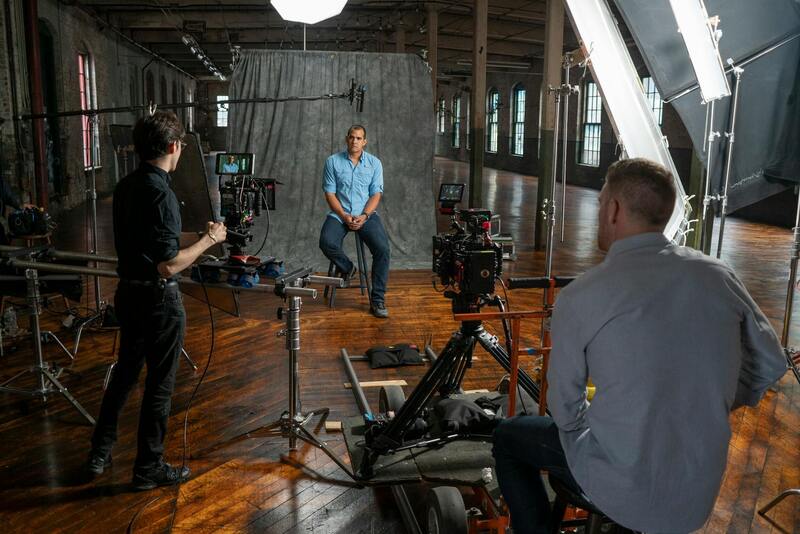
We shoot commercials, brand films, and interviews across Miami and the beaches, and we carry a support kit sized to each job rather than a single default rig. For a founder interview in a Brickell office we might set two fluid-head tripods for a multi-camera setup, add a slider for cutaways, and keep a gimbal ready for hallway shots. For a hospitality piece on a rooftop we bring a mini jib for the reveal and sandbags for the wind.
Because we own and maintain the gear, you are not paying rental markups or gambling on whether a rented head has a worn drag mechanism. Our operators know how each piece behaves in humidity and on reflective surfaces, so setup stays fast and the footage stays usable. If your project also needs live monitoring for a client on set, our notes on production monitors and on-set setup explain how we keep everyone seeing the same frame, and our guide to a multi-camera production setup covers larger shoots.
If you are planning a shoot and want the camera to move with intent instead of by accident, tell us what the scene needs. Browse more field notes on our production blog, or reach the team through our contact page to talk through gear, locations, and schedule. A short call about camera support gear now usually saves a reshoot later.